
Small Dog Backpack Carriers — What Four Bags Taught Us About Fit
Four backpacks, one opinionated corgi, one week of errands. What fit, escape risk, back comfort and ventilation actually require — and how to check each one before you buy.
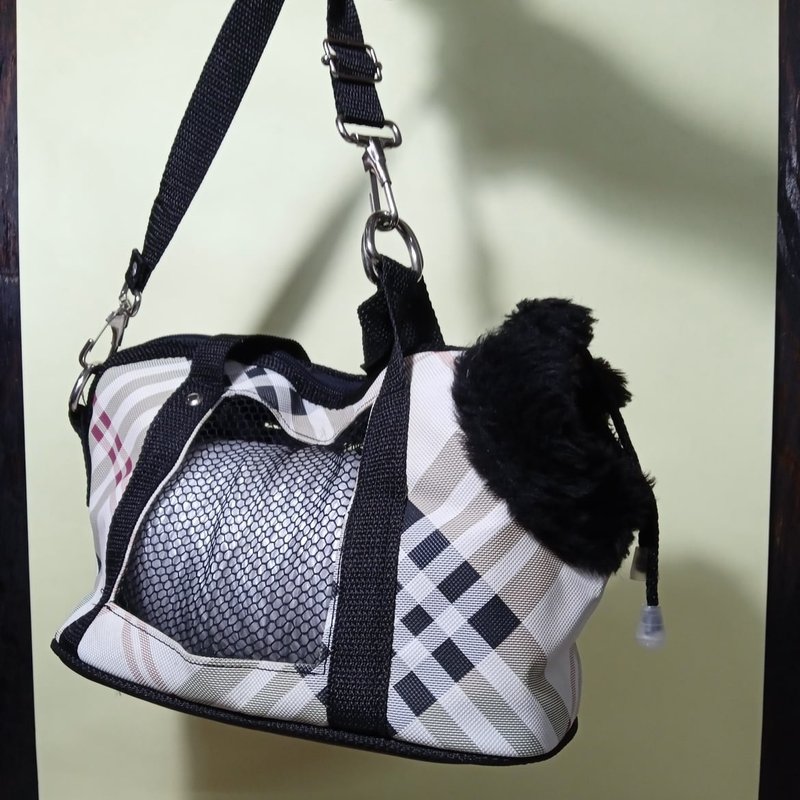
We tested this on Peanut, an 8 lb corgi who is opinionated about transportation. Four backpacks, one week of errands (market, vet, bus, two long walks). Here is what we learned.
This is not a ranking, and it does not name a winner — for the honest reason that the four bags we carried were sample units, we did not keep a record of which model each one was, and a recommendation built on that would be a recommendation we could not stand behind. What we do have is a week of knowing exactly where each bag failed. That is what this page is: the four checks that decided it, in the order they decided it, so you can run them on the bag you are actually holding.
Owner experience, not veterinary advice: the ventilation and overheating notes here come from one dog — Peanut, an 8 lb corgi (n=1) — over a week of errands. If your dog shows heat-stress signs in a carrier, take them out and call your veterinarian.
The four checks, in order
| # | Check | Why it sits here | How we checked it |
|---|---|---|---|
| 1 | Escape resistance | A bag that opens under a lunge is a hazard, not a carrier | Zipped in, stranger walked past with a treat |
| 2 | Back-length fit | Wrong length is the failure you cannot fix with straps | Taped measure, neck base to tail base |
| 3 | Opening direction | Decides whether the dog settles or fights the bag | Watched what Peanut did in each |
| 4 | Load transfer | Decides whether you keep using it after forty minutes | Carried loaded, on foot, through errands |
[Opinion] The order is deliberate. Three of these are about the dog's safety and comfort, and only the fourth is about yours — which is the reverse of how most buying guides present it, and the reverse of how most people shop.
Fit and sizing
Most brands size by back length, measured from the base of the neck to the base of the tail. Peanut is 13 inches back length, and that put him in a "medium" in two brands and a "large" in one.
Trust the tape, not the weight chart
Weights lie because dogs vary in fluff. An 8 lb corgi and an 8 lb chihuahua are not the same shape, and a weight chart cannot see the difference. Measure the back, then compare that number to the bag's interior length — not to the size letter on the tag.
The corgi problem
A corgi's long back and short legs are a special case. Some backpacks designed for round-bodied dogs (Frenchies, Chihuahuas) fit corgis poorly because the torso opening is too narrow. Look for models with adjustable side panels or a wider rear chamber.
This is the check people skip, because the bag looks big enough in the photo. It is not about volume; it is about whether the opening is the right shape for a dog that is long rather than round.
Opening direction matters more than people think
Side-opening backpacks let the dog poke their head out and watch the world. Top-opening bags feel like a crate; Peanut hated those instantly. Side access also means you can slip your dog in without lifting them over the top — gentler on sensitive joints.
We are not calling this a preference. The difference in how fast he settled was visible in the first minute, and it was the same direction every time.
Escape risk
A backpack is a safety device first. We test escape by zipping a dog in, then letting a stranger walk past with a treat — see how we test for the protocol and window.
The zip is the whole mechanism
[Opinion] The one bag that held had a double-zip you can lock together with the included clip. Two zipper pulls that meet, plus something that stops them parting, is the difference between a carrier and a bag with a hole in it. No dog is an escape artist with that setup.
Check this on the unit in your hands, not in the listing photo: do the pulls meet, and is there a clip, loop or lock that keeps them there?
The internal tether
For pullers or anxious dogs, consider a backpack with an internal tether. It won't stop a determined breakout but buys you seconds to react. Check that the tether clip is metal, not plastic — plastic snaps under a real lunge.
Back comfort
Carrying a dog puts weight high on your shoulders.
Straps and the chest buckle
[Opinion] The bags we kept using had wide, padded straps and a chest buckle that shifts the load to your hips. Without the chest buckle, anything over 10 minutes started to hurt.
The chest buckle is the smallest part on the whole bag — a strap and a side-release clip — and the one that decides whether you still use it in month two. If a model does not have one, that is not a detail.
The hip belt
Pay attention to the hip belt too. A good one sits on your iliac crest, not your waist. If it rides up when you walk, it's too high or too narrow. A wide, contoured hip belt makes a huge difference on longer outings.
Ventilation
We also checked ventilation. Mesh panels on the sides and bottom help, but the real test is whether Peanut gets sweaty after twenty minutes. [Opinion] If the back panel is solid fabric, skip it — small dogs overheat fast.
The back panel is the one you cannot see when the bag is on your back and the dog is inside it. Turn the bag around and check it before anything else.
Breed-specific notes
Corgis and Dachshunds: Long-backed breeds need extra torso length. Measure your dog's back from neck to tail base and compare to the bag's interior length, not just the size chart.
French Bulldogs and Pugs: Flat-chested breeds need wider front openings. A narrow chest panel digs into the armpits and chafes. Look for bags with expanded front chambers or zip-around access.
Chihuahuas and Yorkies: Tiny dogs need lightweight bags. [Opinion] If the empty backpack weighs more than 1.5 lb, it's too heavy for a 5 lb dog — you'll be carrying double the load.
What we rejected and why
Three things that took a bag out of use for us, each with the check that caught it.
[Opinion] Top-opening designs. Peanut could see nothing and felt enclosed, and he told us immediately. This is the one failure that no amount of adjustment fixes, because it is the bag's shape, not its fit.
Solid back panels. A bag can have mesh on the flanks and still trap heat where the dog's body actually rests. Check the panel that sits against the dog, not the panels you can see in the product shot.
A zip without a lock. Two pulls that meet are not the same as two pulls that stay met. The lock is the part that survives a lunge.
What we'd change about ours
No backpack solves rain well. The rain cover on every model we tried flapped and made the dog nervous. For wet days we just used the stroller.
We also wish every bag came with a removable chew mat. Peanut's claws scratch the fabric after a few walks, and there's no easy way to replace just the bottom panel.
The short version
- Measure the back, don't guess from weight — and compare to the interior length
- [Opinion] Side-opening beats top-opening for comfort
- Lockable zippers are not optional
- A chest buckle makes the difference on long walks
- Check breed-specific fit if your dog has an unusual shape
FAQ
How do I size a backpack for my dog?
Measure back length from the base of the neck to the base of the tail, then compare that number against the bag's interior length. Peanut is 13 inches, which put him in a medium in two brands and a large in another — the size letter is not portable between brands.
Will my dog be able to escape?
Test the zip on the unit you are holding: do the two pulls meet, and is there a clip or lock that keeps them together? A double-zip with a lock held in our week of testing; a plain zip is the weak point.
Side-opening or top-opening?
Side-opening, if your dog wants to watch. Top-opening bags feel like a crate, and the dog's reaction shows up in the first minute rather than after an hour of adjustment.
How heavy should an empty carrier be?
[Opinion] For a 5 lb dog, an empty bag over 1.5 lb means you are carrying double the load before the dog is even in it.
Related
- Backpack vs sling carrier: which is safer
- Dog stroller vs backpack for city trips
- Small dog gear sizing guide — measure before you buy
[Opinion] The top-loading backpack. Peanut hated it immediately — he could see nothing and felt enclosed. Side-opening is not a luxury feature; it's the difference between a dog who settles and one who panics.