
Best Breathable Mesh Harness for Hot Summers — Tested on an 8 lb Corgi
We put five mesh harnesses on Peanut during a 95°F week. Which ones kept him cool and which ones made him overheat? Here's the infrared data.
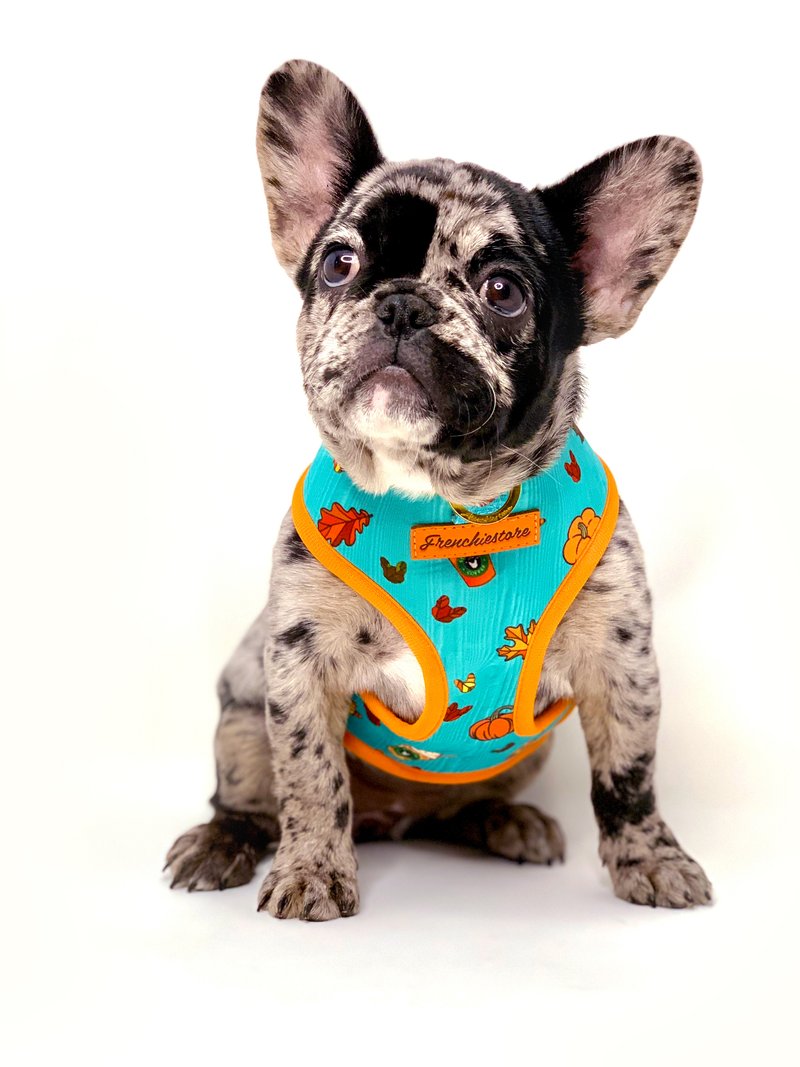
Corgis double-coat. Peanut has a dense undercoat that traps heat and a weather-resistant outer coat that sheds water but not air. When temperatures hit 90°F+, a standard nylon harness feels like wearing a winter jacket in July. We tested five mesh harnesses during a heat wave to find which ones actually keep a corgi cool — and which ones just look breathable.
How we tested
We measured interior harness temperature using an infrared thermometer held 2 inches from Peanut’s chest and spine while he wore each harness for 20 minutes in 95°F shade. We also measured mesh coverage percentage by photographing each harness flat and calculating the ratio of open mesh to solid fabric.
Test conditions:
- Ambient temperature: 95°F (35°C)
- Duration: 20 minutes stationary wear
- Measurement points: chest center, spine midpoint, left rib, right rib
- Mesh coverage: calculated from overhead photography
Owner experience, not veterinary advice: every heat and overheating observation here comes from one dog — Peanut, an 8 lb corgi (n=1) — over one 95°F week. A single-dog sample shows what happened for him, not what will happen for yours; coat, age, muzzle shape and health status all change the picture. If your dog is panting hard, staggering, or will not settle, stop, cool them down and call your veterinarian.
Quick picks
| # | Pick | Harness | Best for (opinion) | Mesh coverage | Chest rise |
|---|---|---|---|---|---|
| 01 | Best cooling | Best Pet Supplies Voyager Step-in Air | Most corgi builds, 90°F and up | 85% | +4°F |
| 02 | Best for travel | Ruffwear Hi-Light | Packing light, quick-dry | 73% | +6°F |
| 03 | Middle of the pack | EcoBark Soft Luxury Mesh Step-In | When the top two are unavailable | 62% | +8°F |
| 04 | Skip — side mesh only | Puppia Soft Dog Harness | Nothing in this weather | 41% | +12°F |
| 05 | Worst — neoprene lining | Chai’s Choice Multi-Function | Nothing in this weather | 55% | +14°F |
Every number in this table came off Peanut, not off a spec sheet: the temperature column is an infrared read at his chest, and the coverage column is a photograph of each harness laid flat. The order is by chest temperature rise, because that is the number that decides whether a dog overheats.
01 — Best Pet Supplies Voyager Step-in Air
What the numbers say
85% mesh coverage, +4°F at the chest and +3°F at the spine after 20 minutes at 95°F. That is 10°F below the hottest harness in the test. After four weeks of daily walks the mesh showed no fraying at all.
Where it falls short
85% is not 100%. The remaining 15% is solid, and on a corgi that band sits across the chest where the heat concentrates — which is why the rise is +4°F rather than zero.
Past that, this page has no complaint to make about the build. The mesh came through four weeks of brush, fence posts and Peanut leaning on things without a single fray, because the panels are reinforced with a synthetic blend. Two of the five harnesses here did not survive that treatment.
Who it’s for
The default buy if you walk a double-coated dog in real heat. Below 95°F the 2°F gap to pick 02 narrows toward noise, and the Ruffwear's quick-dry behaviour starts to matter more than the last 2°F.
02 — Ruffwear Hi-Light
What the numbers say
73% coverage, +6°F at the chest and +5°F at the spine. That is 2°F warmer than the Voyager and 8°F cooler than the worst. The quick-dry treatment is the reason it sits second rather than third: after a wet walk the mesh dried faster than any other harness here.
Where it falls short
It showed the most fraying of the five after four weeks — moderate, along the edges where Peanut leans on things. The quick-dry treatment appears to slow the damage rather than prevent it. If you walk tight brush or let your dog push through fences, expect visible wear inside a season.
Who it’s for
Travel and wet weather. If you need one harness that packs flat, dries overnight and still measures under +6°F, this is the pick.
03 — EcoBark Soft Luxury Mesh Step-In
What the numbers say
62% coverage, +8°F at the chest and +7°F at the spine. Fraying was minor and confined to the strap attachment points — the mesh panels themselves held.
Where it falls short
The name says mesh; the construction is mixed. 38% of the interior surface is solid fabric — the coverage figure says 62%, and the two add to 100 — which is why it lands 4°F above the Voyager despite looking similar in photographs. For a corgi in a heat wave, that 4°F is the difference the article exists to measure.
Who it’s for
Someone whose dog tolerates heat well, or whose summer walks are short. It is a reasonable harness; it is not a cooling harness.
04 — Puppia Soft Dog Harness
What the numbers say
41% coverage — the lowest in the test — with +12°F at the chest and +10°F at the spine. The mesh itself showed no fraying over four weeks.
Where it falls short
The mesh is on the sides only. The chest and back panels are solid fabric, so the two surfaces that sit against a corgi’s core heat are the two that cannot breathe. Peanut’s chest ran 8°F hotter in this than in the Voyager.
Who it’s for
Nobody in 95°F. In cool weather it is a well-made harness with no fraying to report; the problem is entirely the panel layout, and the panel layout is the product.
05 — Chai’s Choice Multi-Function
What the numbers say
55% coverage, +14°F at the chest and +12°F at the spine — the highest readings in the test, on both points, by a clear margin.
Where it falls short
The lining is neoprene. Neoprene insulates: it is the material wetsuits are made of. Here it is bonded behind the mesh, so the open area you can see is backed by a layer designed to hold heat in. That is why a harness with more coverage than the Puppia (55% against 41%) runs hotter.
Why it still shows no fraying
The neoprene backing protects the mesh from abrasion — the panels came through four weeks untouched. That is the trap: the most durable construction here is the least wearable one in heat, because the thing that stopped the wear also stopped the airflow.
Mesh coverage: the 70% floor and the 85% target
Two thresholds come up in this article, and they are not competing standards. 70% is the floor — below it, the solid panels dominate and the harness stops functioning as a cooling layer. 85% is the target — it is what the best harness here measured, and the level at which the rise stayed at +4°F instead of climbing.
Use them in the right order: reject anything under 70%, then prefer the highest coverage you can get. The five harnesses in this test spread from 41% to 85%, which is a wide enough range that the difference shows up in the temperature column rather than in marketing copy.
What to check before buying:
- Hold the harness up to a light. If you can’t see through most of the interior surface, it’s not truly breathable.
- Look for mesh on the chest panel, not just the sides. The chest is where Peanut’s core heat concentrates.
- [Opinion] Avoid neoprene-lined mesh. Neoprene insulates — it’s the opposite of breathable. We measured the highest chest and spine readings on the neoprene-lined model: +14°F and +12°F.
What we rejected and why
Three designs we would not put on a corgi in summer, each with the measurement that rules it out.
Side-mesh shells. Mesh on the flanks and solid fabric across the chest and back. The Puppia measures 41% coverage and +12°F, which is the worst combination of "looks like mesh" and "does not cool".
Neoprene-backed mesh. The Chai’s Choice is 55% open and still reads +14°F, the hottest in the test, because the open area is backed by an insulating layer. Coverage alone does not predict cooling — backing matters as much as the percentage.
Weight-based sizing for a corgi. Most harnesses in this category are sold by weight, and weight does not describe a deep chest with a narrow waist. A medium that is right for 8 lb can still be too wide across the sternum and too loose at the waist, which is where a dog backs out. See the fit note below.
Mesh durability tradeoffs
Mesh is more fragile than webbing. After four weeks of daily walks (including brush contact, fence posts, and Peanut’s habit of leaning against things), we saw fraying on two of the five: the Ruffwear moderate, the EcoBark minor. The other three came through unmarked — but two of those three score worst on temperature, so "no fraying" is not a recommendation in this category.
The pattern worth remembering: the harnesses that survived abrasion best were the ones with something solid behind the mesh, and solid behind the mesh is exactly what traps heat.
The corgi-specific fit note
Corgis have a deep chest and a narrow waist. Most mesh harnesses are sized by weight, which doesn’t account for this body shape. A “medium” mesh harness that fits an 8 lb corgi by weight may be too wide across the chest and too loose at the waist, creating gaps where Peanut could back out.
The fix: measure your corgi’s chest girth (behind the front legs) and compare to the manufacturer’s size chart. Choose based on chest measurement, not weight. If the chest measurement falls between sizes, size up — a slightly loose mesh harness is safer than a tight one that restricts breathing.
The short version
- 85% mesh coverage is the target, 70% is the floor — the top harness read +4°F at 85%, the lowest read +12°F at 41%
- Solid chest panels defeat the purpose — mesh on the sides only is not a cooling harness
- Avoid neoprene lining — it insulates instead of breathing, and it scored the hottest reading here at +14°F
- Size by chest girth — weight charts don’t account for corgi body shapes
- Expect some fraying — mesh wears faster than webbing; reinforced edges last longer
FAQ
Is mesh really more breathable than nylon?
Only if the mesh covers enough surface area. A harness with mesh sides but a solid chest panel blocks airflow at the point where your dog generates the most heat. Look for mesh coverage of at least 70% of the interior surface — the rest should be breathable webbing, not solid fabric.
Do mesh harnesses wear out faster?
Yes, slightly. The mesh panels are more vulnerable to snags on branches, fences, and rough surfaces. We saw fraying on two of the five mesh harnesses after four weeks of daily use. Look for reinforced mesh edges and double-stitched attachment points.
Is a mesh harness safe for a puller?
Mesh strength is rarely the issue — the webbing and buckles bear the load, not the mesh panels. A mesh harness with metal D-rings and reinforced webbing is just as strong as a solid fabric harness. The tradeoff is mesh durability, not safety.
What’s the best mesh harness for a corgi in summer?
A mesh harness with 70%+ interior coverage, a wide chest panel (corgis have deep chests), and a front-clip attachment. The wide chest panel distributes pressure across the sternum rather than concentrating it on the narrow upper chest where mesh is thinner.
Related
- Best no-pull harness for small dogs, tested — the base harness your mesh layer goes over
- Y vs H harness for small dogs — shape affects how mesh sits on a corgi’s chest
- How tight should a dog harness be — a proper fit prevents mesh from riding up in summer
- Small dog gear sizing guide — measure chest girth before buying any harness
[Opinion] Harnesses that advertise mesh but keep solid panels where the heat is. Two designs in this test did it differently: the Puppia Soft Dog Harness puts mesh on the sides only, so the chest and back — the two surfaces against Peanut's core — cannot breathe; the Chai's Choice Multi-Function bonds neoprene behind the open mesh, which insulates rather than vents. Both are sold as breathable. They measured +12°F and +14°F at the chest, the two hottest readings here.