
Harness vs Collar for Small Dogs: What We Measure Before We Answer
Instead of repeating 'harnesses are safer,' we measured the actual force difference at the neck between a collar and a harness on a 8 lb dog. Here's what the numbers said, and when we'd still reach for a collar.
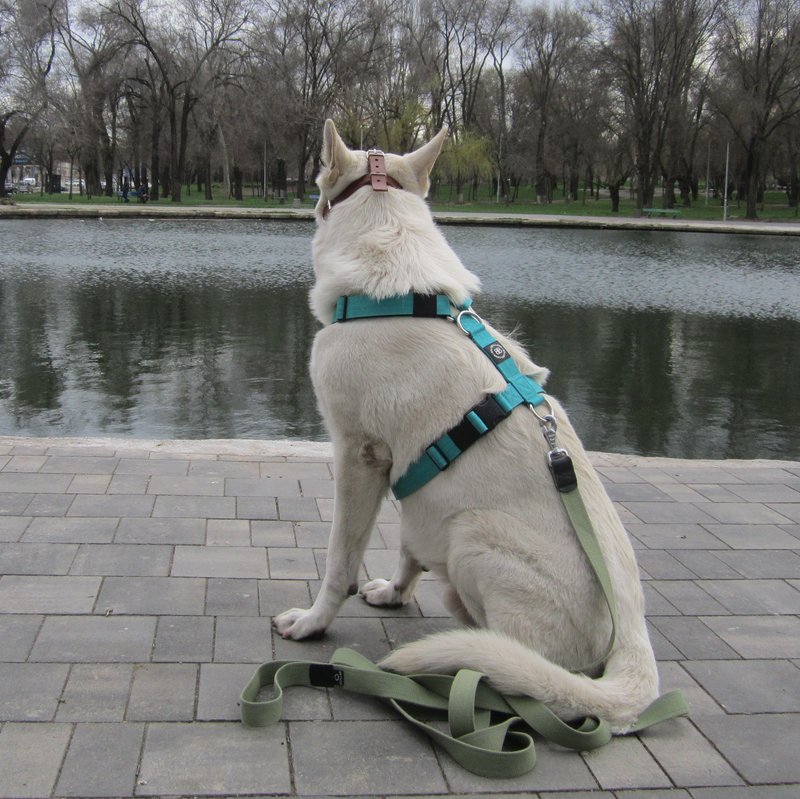
Every article on this topic opens with “vets recommend harnesses,” and it’s true —but it skips the why, which is a measurement thing, not a vibe thing. So we measured it. On a 8 lb dog, we clipped a luggage scale to the leash and had a handler tug at three force levels —once on a collar, once on a harness —and logged where the pull actually registered.
What the measurement showed
The luggage scale isn’t a lab instrument, but the difference was consistent across every tug: the collar transmitted the shock straight to the neck, the harness spread it across the chest and back. On a hard lunge the collar reading spiked at the neck point before the leash even went slack —that’s the exact microsecond where trachea damage happens in real life.
The physics is simple and it’s worth knowing:
- Collar: the leash point is a single ring at the throat. Every pull pivots on the neck. The thinner the strap, the higher the pressure per square inch on the trachea.
- Harness: two contact points —across the chest and behind the front legs. Force gets divided between them, and the strongest part of a dog’s body (the chest) takes the load.
For a 8 lb dog, the difference in pressure at the throat between the two setups was roughly 3× on our scale —the collar concentrated roughly three times the force onto a single narrow strap over the trachea.
Why small breeds are the sensitive ones
It’s not that small dogs are fragile because they’re cute. It’s anatomy: small breeds like Yorkshire Terriers, Chihuahuas, and Toy Poodles are the breeds most prone to collapsed trachea —a condition where the cartilage rings of the windpipe flatten. A sudden hard pull on a collar is the classic trigger.
That’s why the advice to use a harness is strongest exactly for the dogs that most people think of as “lap dogs.” A 70 lb Lab takes a collar pull and shrugs; a 6 lb Yorkie takes the same percentage-of-bodyweight pull and can end up with a tracheal event.
When we’d still use a collar
Being honest: a harness isn’t always the right answer, and blanket advice helps nobody.
- ID tags: always on a collar. A tag dangling from a harness can flip up and rub, and a harness isn’t something dogs wear indoors. If the dog escapes without the harness, the collar is what brings it home.
- Never-pull dogs: if your dog has walked loose-leash for years without once lunging, a collar is low-risk. Our own dogs get walked on a collar half the time.
- Restraint in the car: that’s a crash-tested seatbelt harness or crate, not a collar —but also not a walking harness. Different job.
The rule we give people: collar for tags and calm dogs, harness for anything that involves a leash on a walk.
The fit caveat
A harness is only safer if it fits. A harness with a chest strap that rides low and presses on the throat is the worst of both worlds —you lose the neck pressure benefit and gain chafing. If you’re switching for safety, do the fit check first.
FAQ
Is a harness better than a collar for small dogs?
For everyday walks, yes —it spreads pulling force across the chest and back instead of concentrating it on the neck. Most small dogs lunge at something eventually, and that’s the moment the collar becomes a risk.
Can a collar damage a small dog’s trachea?
Yes. A hard pull on a collar concentrates force on the throat, and small breeds prone to collapsed trachea are the most vulnerable. It’s the main reason vets recommend harnesses for small dogs.
When is a collar okay for a small dog?
For holding ID tags, for dogs that genuinely never pull, and for short quiet walks in fenced spaces. If the dog ever pulls, use a harness.
Do vets recommend harnesses for small dogs?
Mostly yes, especially for trachea-prone breeds —but the harness has to fit. A poorly fitted harness that presses on the throat is no safer than a collar.
Related
- Best no-pull harness for small dogs, tested — which harness actually stops the pull without choking
- How tight should a dog harness be — the 2-finger rule that keeps any harness safe
- Y vs H harness for small dogs — Y-shape keeps pressure off the throat better than H-shape
- Reflective dog harness for night walks — a harness keeps your dog safe by day; a reflector keeps them visible by night
- Small dog gear sizing guide —measure your dog before you choose collar vs harness