
No-Pull Harness for Small Dogs — Which Design Actually Stops the Pull
Five harness designs on one pulling corgi, measured with a luggage scale. Which geometry stops the pull — and why the second-lowest number is not the second-best harness.
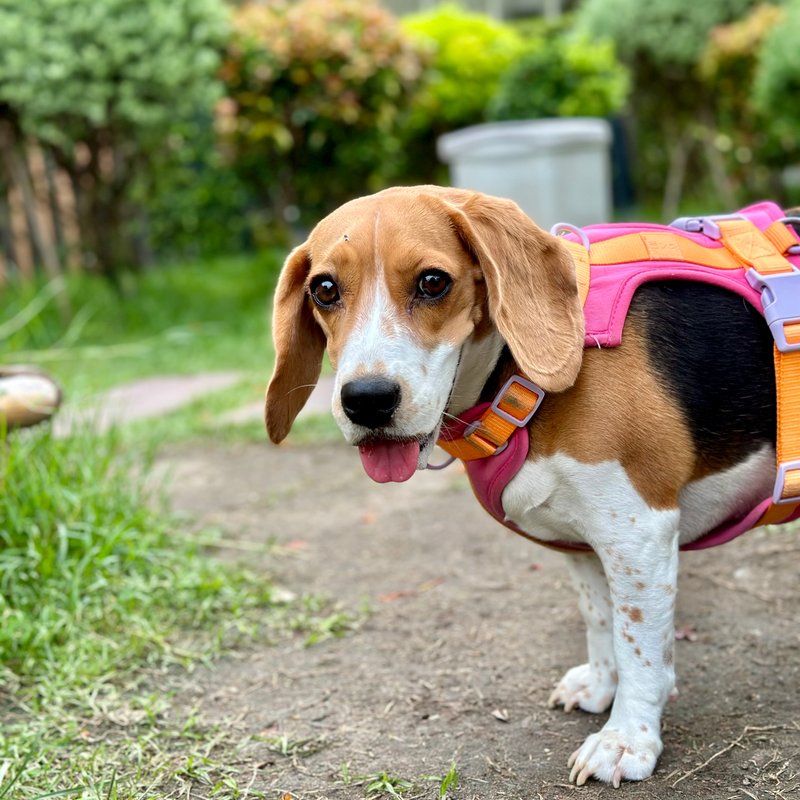
Peanut is a puller. An 8 lb corgi with the ambition of a sled dog, so no-pull harnesses get a real workout in this house. We tested five popular designs for three weeks and measured the pulling force with a luggage scale clipped to the leash.
How we tested
Every harness was worn for the same morning walk route: past the neighbor’s cat, across a road, and up the hill where he loses his mind. We measured peak pull force each walk with a digital scale, and watched for three failure modes — chafing, slipping, and pressure on the throat.
Quick picks
| # | Design | Peak pull force | Choke risk | Slipped? | Best for (opinion) |
|---|---|---|---|---|---|
| 01 | Front-clip no-pull | 4.2 lb | Low | No | The dog who drags you |
| 02 | Martingale-style | 7.4 lb | Medium | No | A calm dog you want to keep a light hand on |
| 03 | Back-clip Y-shape | 9.8 lb | None | No | Throat-sensitive dogs that don’t pull hard |
| 04 | Step-in basic | 11.3 lb | Low | Yes, once | Short trips with a dog who already walks nicely |
| 05 | Chest-only strap | 12.1 lb | Medium | No | Nothing in this test |
Every number above is a peak reading off one corgi on one route, not a manufacturer figure. The order is by pull force, because that is what the article is about — but the ranking is one column, and the other two columns decide whether you can live with the design. Pick 02 sits second on force and joint-worst on choke risk; pick 03 has the third-lowest reading and is the only one that never touches the throat. Read the rows, not the order.
01 — Front-clip no-pull
Best for: the dog who drags you down the street.
What the numbers say
4.2 lb peak pull — 3.2 lb below the martingale, 5.6 lb below the back-clip, 7.1 lb below the step-in and 7.9 lb below the chest-only strap. Choke risk Low, no slip in three weeks.
Where it falls short
It manages the pull; it does not remove it. Peanut still hit the end of the leash on the cat — the harness turned that lunge into a sideways step instead of letting him drive forward. You still need treats and repetition for the behaviour to change.
Who it’s for
Anyone whose dog pulls hard enough to hurt their shoulder. This is the only design here that was under 5 lb, and the gap to the next one is 3.2 lb, which is the largest gap between neighbours in the table.
02 — Martingale-style
Best for: a calm dog you want to keep a light hand on. Not a puller.
What the numbers say
7.4 lb peak pull, the second-lowest reading in the test — 2.4 lb under the back-clip. Choke risk Medium. No slip.
Why the low number is not a win
A martingale-style harness tightens as the leash loads; that is what the design does. So its 7.4 lb is not the same kind of good news as the front-clip’s 4.2 lb: the force reading dropped, but the pressure it dropped to is around the throat, which is why it is one of only two designs here rated Medium on choke risk — while sitting second on pull force.
That combination is a trade, not a victory. If your dog never really loads the leash, you will never feel the downside. If he does, you have bought a quieter scale reading at the cost of the one thing the front-clip is best at.
Where it falls short
Everything above. This is the row people misread: it looks like the safe middle of the table and it is not.
Who it’s for
A dog that walks politely and occasionally surges. For a genuine puller, pick 01.
03 — Back-clip Y-shape
Best for: throat-sensitive dogs that don’t pull hard.
What the numbers say
9.8 lb peak pull, 5.6 lb above the front-clip. Choke risk None — the only design in the test with no throat rating at all. No slip.
Where it falls short
A back-clip lets a dog pull with their full body weight because the force is behind them, like a horse in a cart. That is why 9.8 lb is closer to the step-in than to the front-clip: the design does nothing to interrupt the pull, it just lets the dog lean into it comfortably.
Who it’s for
The dog who already walks on a loose lead, and an owner who wants nothing near the throat. It is the only row with no throat rating at all, and the third of five at stopping a pull — both of those sentences are true at once.
04 — Step-in basic
Best for: short trips with a dog who already walks nicely.
What the numbers say
11.3 lb peak pull, 7.1 lb above the front-clip, and the only harness that slipped: once, in three weeks. Choke risk Low.
Where it falls short
Two problems, and they compound. [Opinion] The design gave us the worst fit control of the five — Peanut is 13 in back length, and the medium was loose while the small was tight, with nothing in between that fitted. A harness that slips once in three weeks is a harness you stop trusting on the road.
Who it’s for
A dog that stands still to be dressed and walks without loading the leash. As a convenience harness for vet visits and short errands it does the job; as a no-pull solution it is 7.1 lb worse than the front-clip.
05 — Chest-only strap
Best for: nothing in this test.
What the numbers say
12.1 lb peak pull — the highest reading here, 7.9 lb above the front-clip and 0.8 lb above the step-in. Choke risk Medium. No slip.
Where it falls short
It is the worst row on both measures that matter for a puller: the most force reaching your arm, and a Medium throat rating on top. The one thing it does well is stay on — no slip, same as the front-clip and the back-clip — which is not enough to recommend it.
Who it’s for
Nobody in this test. If it is what you already own, it is not dangerous, it is just doing no work for you.
Why front-clip beats back-clip for pullers
[Opinion] A front-clip attachment is the only geometry here that interrupts the pull rather than absorbing it — it read 4.2 lb against the back-clip’s 9.8 lb, and the reason is mechanical rather than magical. A back-clip harness lets a dog pull with their full body weight because the force is behind them, like a horse in a cart. A front-clip attachment changes the geometry: pressure on the chest pulls them sideways, which small dogs find uncomfortable enough to stop pulling.
This isn’t a gimmick — it’s the same reason sled dogs are attached to lines behind them.
Fit is everything (especially for small dogs)
A too-loose no-pull harness is just a fancy collar. The chest strap must sit right behind the front legs, snug enough that you can’t fit more than two fingers under it. Too tight and you’re crushing their ribs; too loose and they’ll back out of it at the worst moment.
For a small dog, the strap width matters too. Narrow straps dig into their shoulders. Look for at least half an inch of padding where it crosses the chest.
What we’d warn you about
- Front-clip alone won’t fix training. It manages the pull physically; you still need treats and consistency for the dog to learn.
- Front-clips with plastic hardware wear out fast. The D-ring on one of the front-clip harnesses we tried bent within two weeks. Pay for the metal, not the plastic.
What we rejected and why
Three things we would not put on a small dog, and why they are not rows in the table above.
Collar-style no-pull harnesses. The kind that tightens around the throat when the dog pulls. It is marketed as a no-pull solution but concentrates force on the trachea — the exact opposite of what a small dog needs. We did not put it through the pull test, so it carries no force number here; a design built to load the throat is not one to strap on a small dog and measure.
Front-clips with plastic hardware. The load in a front-clip runs through the D-ring, and the plastic D-ring on one of the harnesses we tried bent within two weeks. The reading in the table comes from a harness whose hardware held; we would not expect the plastic version of the same layout to reach week three.
A harness used instead of training. We are not going to list this as a design because it is not one. Every number in the table is what the harness did to one dog's pull on one route; none of them teach the dog anything.
FAQ
Will a no-pull harness hurt my small dog?
Only if it’s fitted wrong or the straps are too thin. Front-clip is generally the gentlest option because pressure goes to the chest, not the throat.
My dog slipped out of their harness. What now?
Check the chest strap fit first, then look for escape-proof designs with a second belly strap. Some small dogs can back out of any single-strap harness.
Front-clip or back-clip?
For a puller, front-clip. For a calm dog on a long lead, back-clip is more comfortable because the leash never crosses their body.
How tight should a small dog harness be?
Two fingers should slide under the chest strap but not three. Check it every few weeks — puppies grow fast.
Related
- Reflective dog harness for night walks — real visibility test — front-clip works at night too; pick a harness that stays aligned when your dog turns
- Y vs H harness for small dogs — Y-shape distributes pull force better than H-shape for stubborn pullers
- Best breathable mesh harness for hot summers — mesh reduces heat buildup on top of the no-pull design
- Small dog gear sizing guide — measure before buying any harness
[Opinion] The collar-style no-pull harness (the one that tightens around the throat when your dog pulls). It's marketed as a no-pull solution but concentrates force on the trachea — the exact opposite of what a small dog needs.