
How to Get a Small Dog to Drink on Hot Walks — Tested
Small dogs overheat faster than you'd think and rarely drink on command. We ran a simple dehydration check and tested five hydration strategies with our corgi Peanut over three weeks. Here's what actually got water into him on hot walks — and the heat-stroke warning signs to watch for.
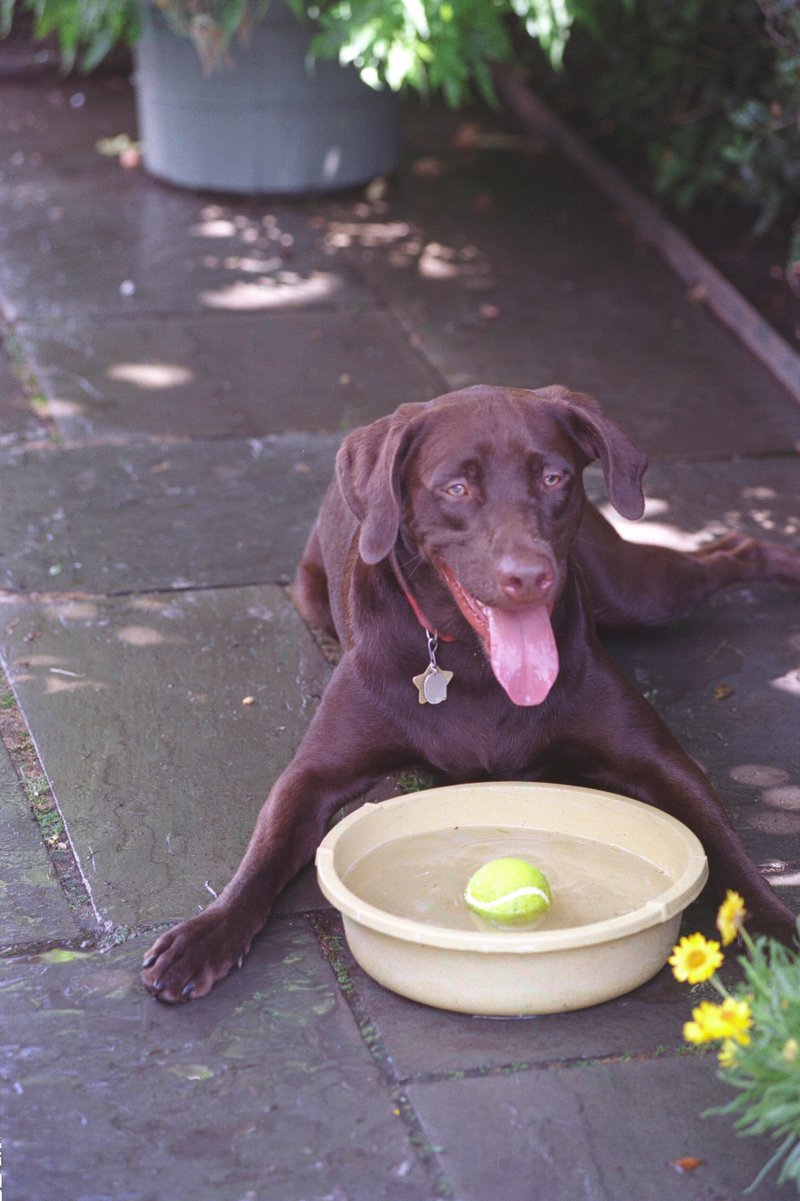
Peanut won't drink from most travel bottles. We've tried six models over two summers, and he consistently turns away from the narrow spout, licks the side, or just walks off. After watching him get progressively slower on warm walks — panting harder, sitting down more often — we realized hydration was a problem worth solving.
A small dog is closer to heat stroke than you are on a hot day: more surface area per pound of body weight, less mass to absorb heat, and no way to shed it through sweat. But the harder problem is that most dogs won't drink when you want them to. Forcing a bowl of water in front of a panting dog does nothing. We tested five strategies with Peanut over three weeks — different bottle types, bowl attachments, timing adjustments, and cooling tricks — and ran a simple dehydration check before and after. Here's what worked, what didn't, and the warning signs every owner should know.
Sample and scope: every observation on this page comes from one dog — Peanut, an 8 lb corgi (n=1) — over three weeks of summer walks. A single-dog sample shows what happened for him, not what will happen for yours; breed, age, muzzle shape and health status all change the picture. This page is owner experience, not veterinary advice. The dehydration checks below are observation habits, and the heat-stroke section is first-aid orientation — if your dog shows those signs, call a veterinarian.
Why small dogs won't drink on command
When a dog is panting hard, drinking is mechanically awkward — panting and lapping use the same jaw muscles. A dog that's mid-pant usually can't or won't stop to drink. This is why offering water after a run so often fails: you're fighting their physiology, not their stubbornness. The window for drinking is before heavy panting starts, not after.
The hydration test we use
Before changing anything, we established a baseline. On a 20-minute walk in 75°F weather, we measured:
- How many times Peanut stopped to drink (naturally or when offered)
- His resting heart rate (counted pulses on the left chest for 15 seconds × 4)
- Gum moisture (touched with a clean finger — should feel slick, not sticky)
- Skin elasticity (pinched gently behind the shoulders — should snap back instantly)
After a walk without extra hydration stops, his heart rate was 100 bpm (normal resting is 80–100), gums were slightly tacky, and skin snap-back took two seconds instead of one. He was mildly dehydrated — not dangerous, but enough to affect his energy on the walk.
What didn't work
Standard spout bottles. Five models failed the same way: Peanut would investigate, sniff, maybe lick the tip, then lose interest. The narrow stream frustrated him — he couldn't get a good grip, and the plastic taste seemed to bother him.
Insulated bottles. These kept water cold but didn't fix the spout problem. Cold water only helps if your dog will actually drink from the dispenser.
Adding flavor. We tried chicken broth and apple juice (a 1:10 dilution). Peanut drank more eagerly, but the sugar in juice worried us for regular use, and broth made a mess if the bottle tipped.
Collapsible bowls (first attempt). The first bowl we tried had a rigid rim that folded flat. Peanut couldn't get leverage — his paws slipped on the smooth silicone, and he couldn't tilt it to reach the water.
What actually worked
Bowl-attach bottles. The breakthrough came with a bottle that has a detachable silicone bowl snapping onto the base. The bowl is wide enough for Peanut to lap naturally, and the attachment stays secure even when he pushes against it with his chin.
A timing strategy. We stopped waiting for Peanut to "ask" and started offering every 15–20 minutes. Small dogs don't always show thirst until they're already dehydrated, so a phone timer kept us consistent. (More on where to offer in the routine below.)
Cooling the water. We pre-chill the bottle in the fridge and add one ice cube before each walk. Cold water is more appealing in heat, and the melting ice keeps it cool for the first 30 minutes. Note: fully ice-cold water straight from the freezer can be a shock some dogs refuse — tepid-to-cool is the reliable zone. And a single-wall metal bottle warms the water within minutes, so we use a double-wall bottle or insulated pouch.
Shade breaks. We walk during cooler hours (before 9am or after 6pm) and seek shade whenever possible. Less heat stress means less urgent hydration need.
The routine that stuck (three triggers)
The product helped, but the habit is what actually gets water into Peanut on a 90-degree day. Three things became non-negotiable:
- Offer before they're exhausted. The window is before heavy panting starts — at natural pause points like a crosswalk, a café seat, or the first five minutes of the walk, when he's warm but not panting hard. Waiting until he looks thirsty is waiting too long.
- Make it a routine, not a surprise. When Peanut learned that water appears at the same park bench every walk, he started walking to the bench and waiting. It took about a week of offering water at the same bench before he started going to the bench on his own.
- Hot-weather tricks. Beyond just offering: give him a minute in the shade so the panting eases before he drinks; wet his ears and paws with a towel (that cools him faster than drinking alone, and we saw him drink sooner after a quick cool-down); and keep the water tepid-to-cool rather than ice-cold.
Heat warning signs (and what to do)
First-aid orientation only — if you see these signs, call a veterinarian. This is owner experience, not veterinary advice, and it comes from a single dog (n=1).
Knowing when to stop matters more than knowing how to get them to drink. Stop walking and find shade if you see:
- Excessive, fast panting that doesn't ease when they stop
- Drooling more than usual
- Bright red or pale gums
- Weakness, stumbling, or collapsing
- Vomiting
A panting dog who refuses water and shows these signs is an emergency — cool them down (shade, wet towel, offer small sips) and get to a vet. Don't wait for them to drink.
The numbers
After two weeks on the bowl-attach + timer routine, we repeated our hydration test:
| Metric | Before | After |
|---|---|---|
| Resting heart rate post-walk | 100 bpm | 88 bpm |
| Gum moisture | Slightly tacky | Pink and slick |
| Skin snap-back | 2 seconds | Immediate |
| Walk endurance | Sat down at 25 min | No stops until 40 min |
The difference was clear: Peanut drank more, recovered faster, and kept going longer.
Product comparison
| Bottle Type | Drinkability (opinion) | Leak-proof | Weight |
|---|---|---|---|
| Standard spout | Poor | Yes | Light |
| Bowl-attach | Excellent | Yes (sealed) | Medium |
| Collapsible bowl (rigid) | Fair | No | Light |
| Open bowl (no bottle) | Excellent | N/A | Heavy |
[Opinion] The bowl-attach bottle won despite being pricier. The seal keeps water from leaking in your bag, and the wide bowl lets small dogs drink naturally.
The short version
- Small dogs often reject narrow spouts — try a bowl attachment
- Set a timer for regular offers; don't wait for thirst signals
- Pre-chill water and add an ice cube for hot days (keep it cool, not ice-cold)
- Offer before heavy panting, at the same spots, as a routine
- Watch for dehydration signs: tacky gums, slow skin snap-back, elevated heart rate
- Bowl-attach bottles solve the drinkability problem
FAQ
How do I know if my small dog is dehydrated?
Check the gums — they should be pink and slick, not sticky or pale. Pinch the skin behind the shoulders; if it doesn't snap back instantly, your dog may be dehydrated. Other signs: excessive panting, lethargy, dry nose.
Why won't my dog drink from a travel bottle?
Most small dogs find the narrow spout confusing or uncomfortable. The water flow may be too thin, or the bottle shape doesn't let them lap naturally. Try tilting the bottle to create a wider pool, or switch to a bowl-style attachment.
How much water does a small dog need on a hot walk?
As a rule, offer 1–2 oz (30–60 ml) every 20–30 minutes in warm weather. An 8 lb corgi like ours typically drinks 4–6 oz per hour on a warm walk, and about 3 oz on a shorter hot walk. Adjust based on pace, shade, and wind, and watch the signs above rather than counting ounces.
How often should I offer water?
Every 20–30 minutes on a hot walk, at pause points, before heavy panting starts. A phone timer helps you stay consistent instead of waiting for thirst signals.
My dog won't drink from the bottle. What now?
Try the same water in a collapsible bowl, or wet their mouth and ears first. Some dogs just need a different delivery — many owners prefer bowls for reluctant drinkers because they can lap naturally without figuring out a spout (the tradeoff is carrying an extra item).
Can I use regular water instead of a travel bottle?
Yes, if you bring a collapsible bowl. Many owners prefer bowls for reluctant drinkers — they can lap naturally without figuring out a spout. The tradeoff is carrying an extra item.
Related
- Best portable dog water bottle that doesn't leak — which bottles survived our week-long test
- Collapsible bowl vs water bottle: which to carry — when to carry both
- Small dog gear sizing guide — measure before you buy